
Transitioning to Agroecology on the Prairies
Photo credit: Aaron
Researchers: Evan Bowness, Jessie MacInnis, and Annette Desmarais
Global agriculture and related land use changes are one of the most significant contributors to greenhouse gas emissions, pointing to the need for a transformation in how we produce and consume food.

One of the proposals being advanced at the international level is agroecology,
or ecological agriculture, which includes basing our food system on ecological and social justice principles aimed at respecting natural environments, supporting dignified worker livelihoods, and valuing diverse cultures and local knowledges.
A shift to agroecology requires a transition from conventional farming practices
that depend highly on energy and greenhouse-gas intensive inputs to practices that conserve soil and water and recycle nutrients. Yet, there is very little research on how farmers are shifting to agroecological in places where the landscape is dominated by conventional agriculture, as is the case on the Canadian Prairies.
Photo credit: Leah
Publications
-
Jessie MacInnis, Evan Bowness, Annette Aurelie Desmarais, and Stuart Oke, 2024.
Given the potential of agroecology in the context of the deepening climate crisis, and its conspicuous absence as a recognizable farming system in the Prairies, we set out to trace a portrait of Prairie agroecology through engagement with non-conventional farmers.
Specifically, we wanted to know:
▶ How do non-conventional farmers in the Canadian Prairies define and practice
agroecology? And,
▶ What role do they see it playing in the face of the climate crisis?
-
Evan Bowness, Jessie MacInnis, Annette Aurelie Desmarais and Stuart Oke, 2024. Elementa: Science of the Anthropocene.
Climate change is driving new challenges for farmers around the world, provoking a sense of urgency in the search for on-farm solutions and pathways to sustainable agricultural systems. While agroecology has gained recognition as a promising option for climate resilience, it remains nascent in the Canadian Prairies—a significant agricultural region dominated by large-scale conventional agriculture. Amid the sprawling fields of grains and oilseeds primarily destined for export markets, growing farm consolidation, and increased land concentration, farmers committed to ecological principles are building a prefigurative foundation for prairie agroecology. Far from cohering into a unified definition, this article captures what agroecology on the Prairies looks like. Through a community-engaged research design and in consultation with the National Farmers Union of Canada, we explore farmers’ reflections on agroecology and provide a participatory platform for farmer-led constructions of agroecology. Through dialogue with 19 farmers of different farm sizes and production types that began in the 2021 farming season—one marked by drought and extreme heat—we use photovoice, visual elicitation interviews, and participatory video to document and mobilize visual constructions of an emerging prairie agroecology. Despite a shared vision among the farmer participants about the need for a sustainability transition through diversified farming practices, three key questions emerged about the future of prairie agroecology: (1) Can prairie agroecology scale up and out, and if so, under what conditions? (2) To what extent is prairie agroecology possible without dense, place-based social networks? and (3) What are the possibilities for prairie agroecology when the future of farming in the region is uncertain, especially given the changing farmer demographics and Canada’s settler colonial context? We explore these questions and provide reflections on key issues confronting the future of prairie agroecology.
-
Evan Bowness, (Producer/Camera), Annette Aurelie Desmarais, (Producer), Jessie MacInnis,(Camera), Lucman, O. (Camera/Editing/Music). Launched at the National Farmers Union of Canada Convention (November 2023). Funded by SSHRC and UManitoba.
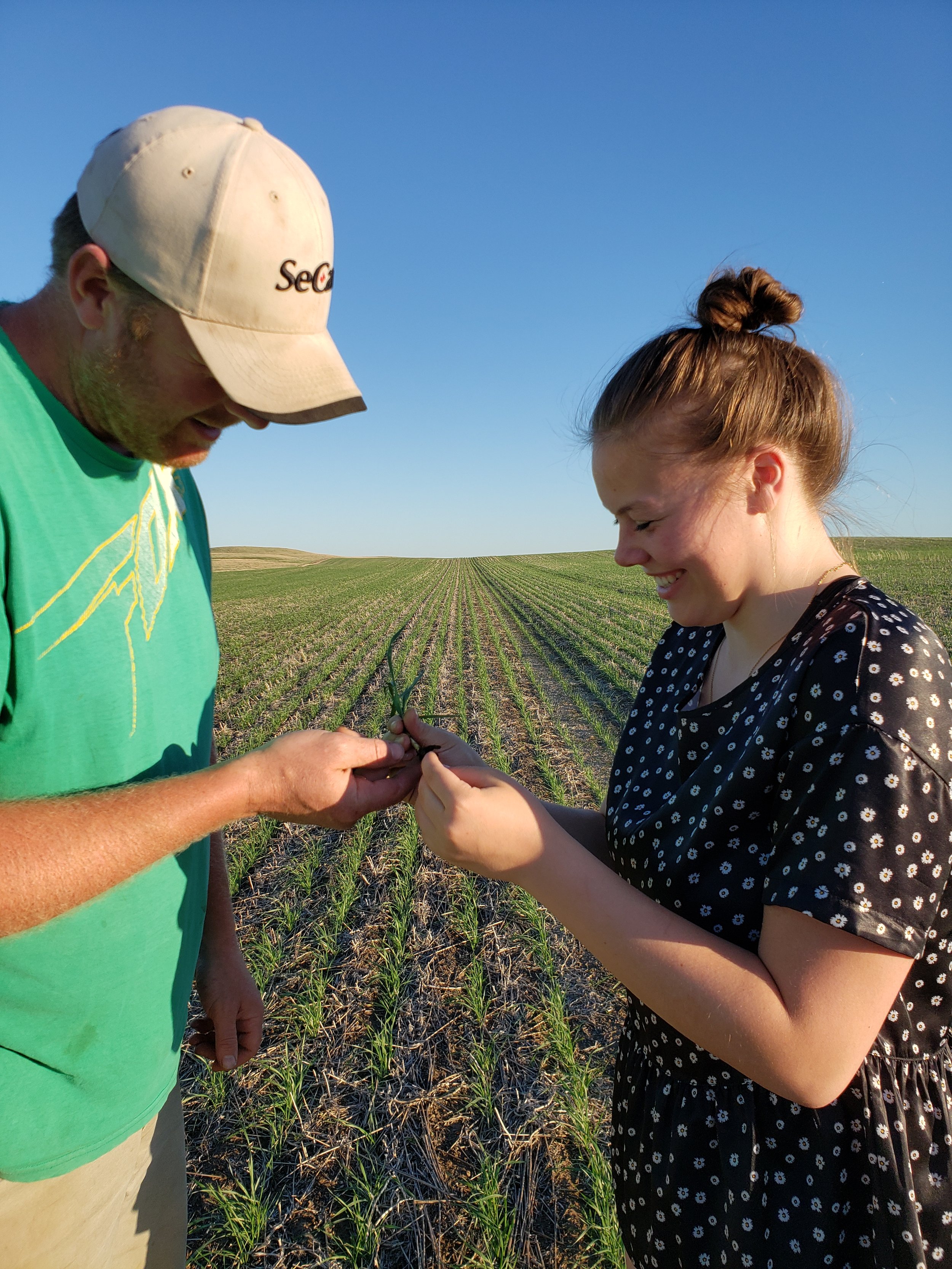
This project uses participatory methodologies
that generated both visual and textual/verbal data. This research seeks to answer the following questions: How do non-conventional farmers in the Canadian Prairies define agroecology? Do they consider themselves agroecological? What is their vision for agroecology on the Prairies, and do they think it is a pathway to sustainable food systems in the face of the climate crisis?
This project is a collaboration with the National Farmers Union of Canada (NFU). It combines academic, farming, and filmmaking expertise to engage in critical research focused on problems of joint interest to collaborators by exploring the potential to transform food systems in the context of an unfolding climate crisis.
Photo credit: Tannis